
Menu
Preparing Old Concrete for Resurfacing in Miami Beach
Concrete Resurfacing Miami Beach
Concrete resurfacing in Miami Beach offers an affordable and effective option for restoring both the look and function of your old, deteriorating concrete slabs. It will transform your driveways, patios, and pool decks with a new, attractive, and long-lasting surface at a fraction of the cost of replacing the entire slab. The key to successful resurfacing of any concrete slab is in preparing that slab properly. Since Miami Beach has one of the most corrosive environments for concrete due to its high salt content, humidity levels, and extreme temperatures, proper preparation is especially important in order to get the longest life possible from your new finish.
The Importance of Proper Preparation for Concrete Resurfacing
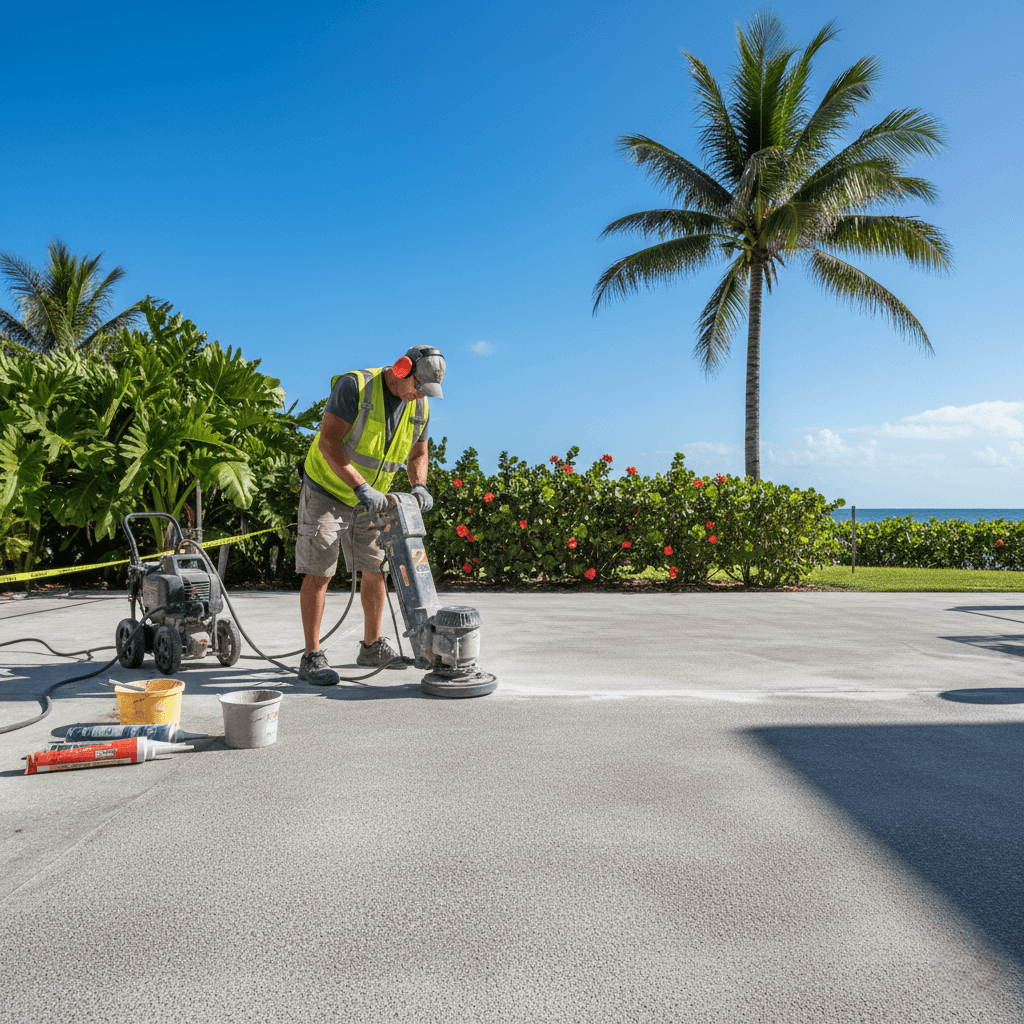
The salt and moisture in the Miami Beach air and climate can weaken adhesion and durability when a surface has not been properly prepared. Thus, failing to complete this step thoroughly will lead to premature peeling, cracking, or early wear on a newly applied surface. Preparation allows for the tightest possible bond between the new and old surfaces, which creates a durable and smooth finish capable of enduring the harsh coastal climate. Therefore, when a homeowner completes the steps involved in preparation, they extend the life expectancy and performance of his/her resurfaced concrete.
Step 1 – Assessing the Condition of the Old Concrete
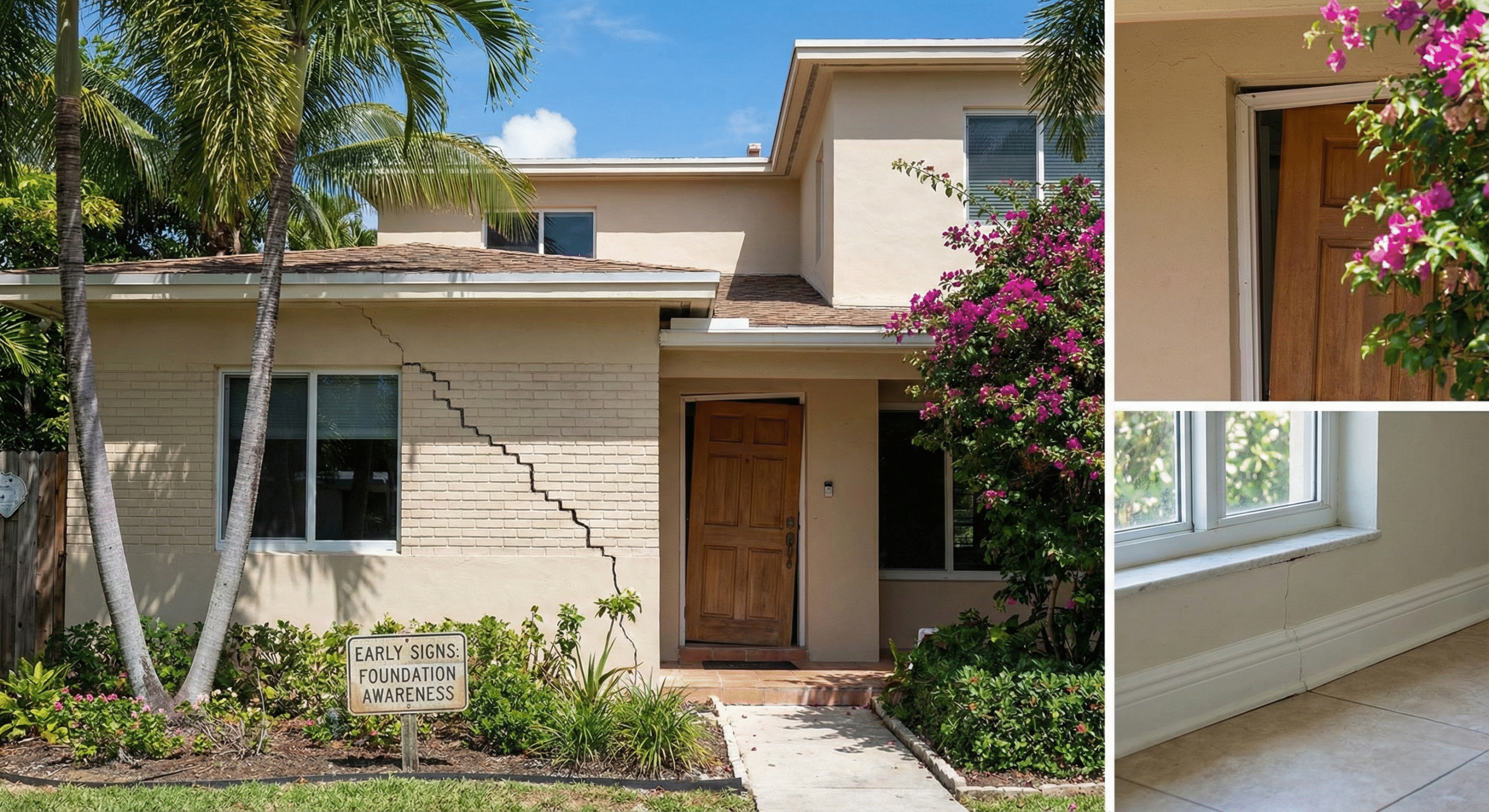
Before you start your project, take the opportunity to assess the overall condition of the existing concrete. Look for any major damage to include large cracks, spalling, or crumbling sections. You can repair many minor imperfections during the preparation phase; however, if the problem is major enough, you may have to make repairs or replace a portion of the damaged area. Also, evaluate the condition of any drain systems, edges, and/or joints. Drain systems, edges, and joints are typically exposed to more moisture and salt in the humid, salty coastal climate of Miami Beach and therefore tend to deteriorate at a faster rate. If you do not know how to assess the condition of your concrete or if the condition is unclear, consider consulting with a professional.
Step 2 – Thoroughly Clean the Concrete Surface
Prior to applying the new surface coating, clean the concrete surface to provide for maximum adhesion. Use a broom or blower to remove all loose dirt, debris, and concrete. Pressure washers using cleaners or degreasers are necessary for removing oil, grease, or mildew. Due to the prevalence of salt accumulation in Miami Beach, it is also important to thoroughly rinse the concrete surface with fresh water. It is essential to allow the concrete to completely dry before proceeding to the next step. Moisture remaining on the surface will significantly weaken the adhesive qualities of the new surface coating.
Step 3 – Repairing Cracks and Spalling
Repairing cracks and spalling will establish a solid foundation for the new surface application. Small cracks should be filled with a crack filler or epoxy, and larger cracks and spalling repaired with a more substantial repair compound. Loose concrete from spalled sections should be removed and replaced with a repair compound. All repairs should be smoothed to blend with the adjacent concrete. When selecting repair compounds for coastal climates like Miami Beach, choose products resistant to salt and moisture to optimize longevity.
Step 4 – Etching or Grinding the Surface for Improved Adhesion
Etching or grinding the surface will improve the bonding between the new surface coating and the old concrete surface. Acidic etching solution will open up the pores of the concrete and increase its surface texture, providing a better “grip” for the new surface coating. Diamond grinders achieve similar results by increasing the surface texture of the concrete and removing any residual contamination. The effectiveness of both methods provides improved adhesion to the new surface coating. In Miami Beach, where the presence of salt and humidity continuously threatens to weaken the bond, this step is critical to prevent future delamination.
Step 5 – Application of a Bonding Agent
Bonding agents improve the strength of the bond between the old surface and the new surface coating. After cleaning, repairing, and etching/grinding the surface, apply the bonding agent according to the manufacturer’s instructions. Be certain the bonding agent will adhere to both the existing surface and the resurfacing material. Even though this step is important indoors, it is especially crucial outdoors, where salt and moisture will continue to exert stress on the bond.
Step 6 – Selecting the Best Resurfacing Material
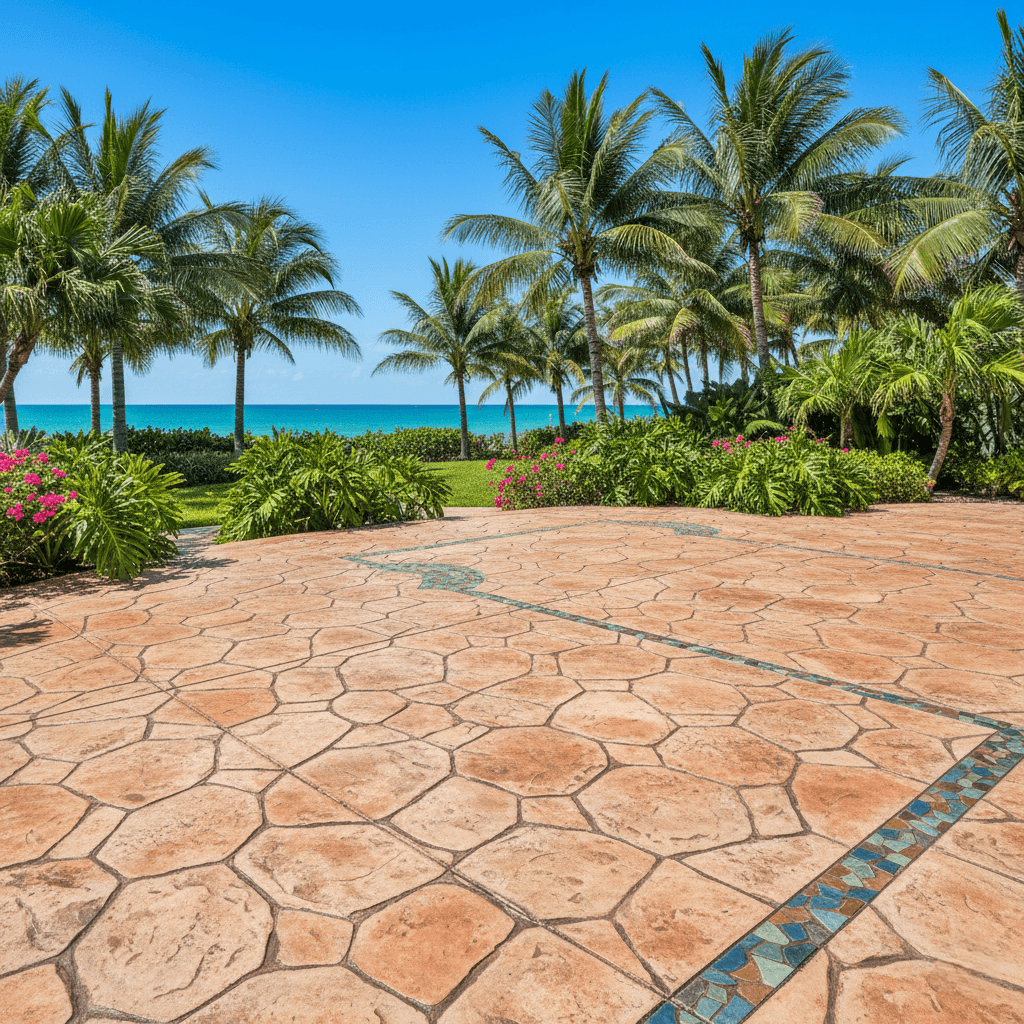
When choosing a resurfacing material, consider the environmental conditions found in Miami Beach. The combination of salt, high humidity, and UV radiation means that you need to select a product that is strong, flexible, and able to perform in harsh environments. Polymer-modified overlays provide superior adhesion and crack resistance. Stamped or textured overlays will provide a decorative appearance while increasing slip-resistance. To ensure optimal performance, consult with a professional who has experience working with coastal materials and recommends a product that will suit your driveway, patio, or pool deck.
Step 7 – Consideration of Environmental Factors
In comparison to other locations, Miami Beach’s climate has a significant impact on the resurfacing process. Salt and humidity in the air can slow down or weaken the curing process of the new surface coating. When selecting a product, consider those specifically designed for use in coastal environments. Schedule the resurfacing project for dry and mild weather. Avoid scheduling during periods of rain or extreme temperatures, as these will negatively affect adhesion and durability. Experience working in coastal climates is invaluable when selecting a contractor for your project.
Rely On Miami Beach Concrete Works for Your Resurfacing Needs
Concrete resurfacing in Miami Beach requires expertise and knowledge of the unique challenges of the coastal environment. At Miami Beach Concrete Works, we successfully restore worn-out concrete surfaces with durable and aesthetically pleasing finishes that will endure salt, humidity, and heat. We follow a multi-step preparation process to ensure long-term success. Whether it involves evaluating your existing concrete, selecting the right resurfacing materials, or completing the project itself, we offer customized solutions for your home and property to increase its value and produce a durable concrete surface that will last for years to come.
LATEST POSTS