
Menu
Pouring Concrete in Miami Beach’s Hot, Humid Climate
Pouring Concrete Miami Beach
There are several reasons that pouring concrete on Miami Beach may be challenging; however, they all stem from the same reason, its warm and humid climate. The high temperature, high humidity, as well as short rain showers can all negatively affect the quality, strength, and durability of fresh-poured concrete. Thus, when pouring concrete in Miami Beach, it is critical to plan the time carefully, the environmental factors, as well as the preparation methods. Whether you are a homeowner who is building a home improvement project yourself or a contractor in charge of a commercial construction project, you will want to know how to pour concrete correctly so that your project is successful and not plagued with cracks, weakened areas, and poor curing. Below, we will explain the ideal conditions for pouring concrete in Miami Beach and how these conditions will ensure your project’s longevity.
Why Miami Beach’s Climate Affects the Pouring of Concrete
Miami Beach’s climate affects the speed of the concrete’s curing process and workability. The high temperatures of Miami Beach’s climate can lead to faster curing of the concrete; however, this may also lead to problems such as cracking, a decrease in the strength of the concrete, and poor workability. Additionally, the high humidity of Miami Beach’s climate may inhibit the curing process of the concrete, which could result in a weaker final product. Also, sudden rainstorms may wash away fresh concrete or may cause an uneven finish. Therefore, it is very important to schedule your project for optimal weather conditions and to utilize techniques that are specifically designed to mitigate the effects of Miami Beach’s climate.
Best Times of Year to Pour Concrete in Miami Beach
It is best to pour concrete in Miami Beach during the cooler and drier months of the year. These months are generally between November and March, when the average temperature is lower, and there is lower average humidity. These conditions are ideal for the curing process of concrete. It is recommended to pour concrete early in the morning or later in the afternoon when the temperature is cooler and when the moisture loss is slower. Do not pour concrete during the hottest part of the summer (June to September) because of the extreme heat and humidity. When you do have to pour concrete during the hotter months, you should implement additional measures to regulate the curing environment.
Best Time of Day to Pour Concrete in Miami Beach
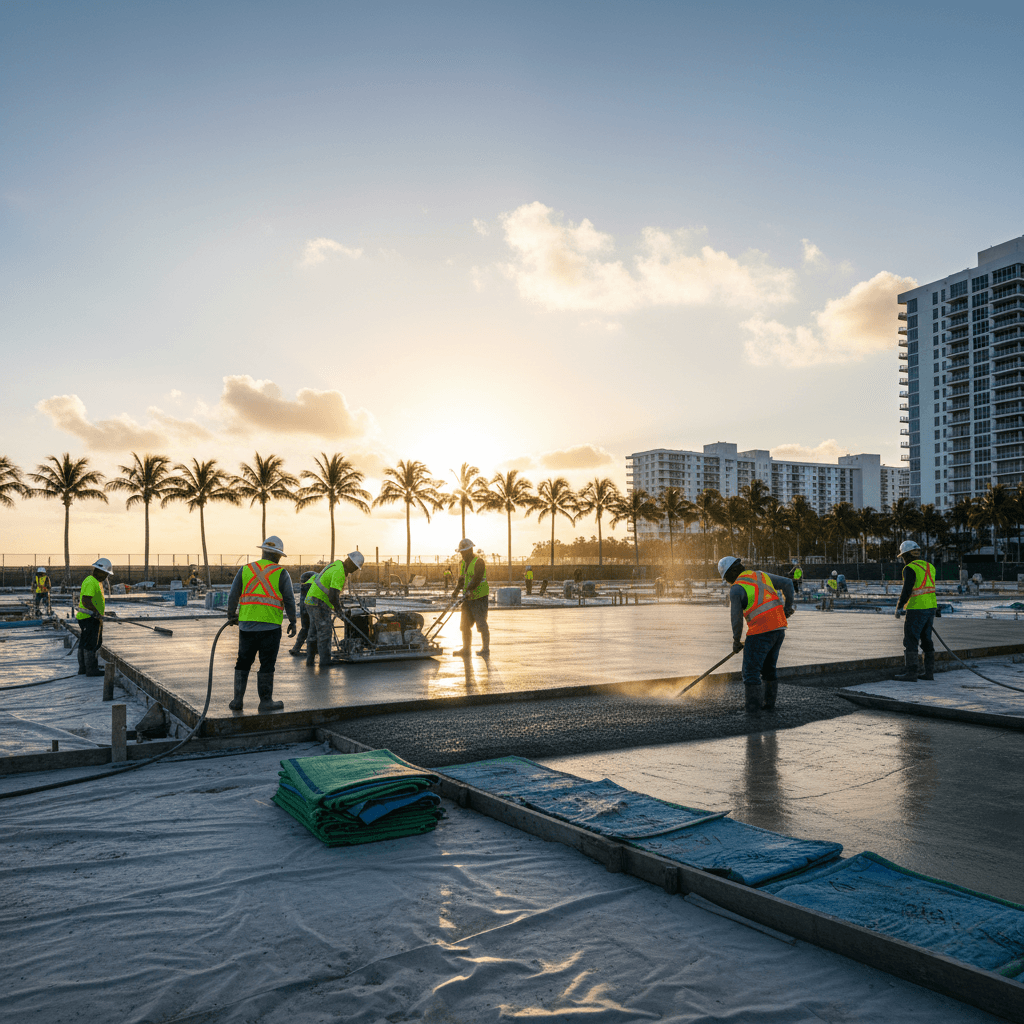
While the time of day you decide to pour concrete in Miami Beach will greatly influence the success of your project, the best times to pour will vary depending on the time of year. The coolest part of the day in Miami Beach is usually between 6 am and 10 am, and this is the best time to pour concrete. The temperature is cooler, and there is a greater opportunity for the concrete to cure uniformly. Late in the afternoon (after 4 pm) is another acceptable time to pour, as the intensity of the sun is lessened, and the concrete begins to cure as the temperature drops. Do not attempt to pour concrete during the middle of the day, as the sun is at its peak, and the heat will cause the concrete to dry rapidly, causing cracking and reducing the structural integrity of the concrete.
Weather Forecast Before Pouring Concrete
When preparing to pour concrete, it is necessary to check the weather forecast prior to commencing the pouring process. An ideal time frame would include at least 24-48 hours of dry and relatively mild weather without any precipitation in the forecast. Precipitation will either wash away the newly poured concrete or create weak points in the structure of the concrete. High wind will increase the rate of moisture evaporation, thus leading to uneven curing. Utilize reliable weather forecasting apps or contact local meteorologists to assist in scheduling your project. If rain is predicted, either delay the start date of your project or install a cover on top of the wet concrete to protect it until it cures.
Moisture and Temperature Control During Curing
Curing concrete is one of the most critical aspects of producing strong, long-lasting concrete, especially in a humid climate like Miami Beach. Once you have poured the concrete, it is imperative to control both the temperature and moisture to facilitate uniform curing. Use curing blankets, plastic sheets, or specialized curing compounds to keep the concrete moist and slow down the curing process. In extremely hot weather, misting the concrete with water can help to sustain the desired level of moisture. However, it is essential to avoid allowing the concrete to dry too quickly, as this may cause surface cracks and a reduction in the strength of the concrete. Allow the concrete to cure for at least 7 days, with the ideal temperature range being between 50°F and 75°F.
Concrete Mixes Suitable for Hot and Humid Climates
Choosing the correct type of concrete mix is one of the key elements in successfully pouring concrete in Miami Beach. Choose concrete mixes formulated for use in hot and humid climates, including those containing fly ash, slag, or silica fume. These types of concrete mixes are beneficial in improving the workability of the concrete and decreasing the potential for cracking. Retarders can be used to extend the time it takes for the concrete to set, thus allowing for improved placement and finishing of the concrete in extreme temperatures. Additionally, using fibers within the concrete can provide added durability and increased resistance to thermal stresses. Contact your concrete supplier or a licensed contractor to determine the best concrete mix for your project based on Miami Beach’s climate.
Preparing Your Site for Success
Preparing your site properly is essential to a successful concrete pour. Remove all debris, plants, and free dirt from the area. Pack the subgrade extensively to produce a solid base for your concrete. Add a layer of gravel or crushed rock to the subgrade to allow for improved drainage and to preclude settlement of the concrete slab. Apply forms and reinforcement (i.e., rebar or wire mesh) to the concrete to ensure the concrete maintains the desired shape and strength. In Miami Beach, where the water table is elevated, proper drainage is paramount to prevent the water from undermining the concrete slab. By taking these preparatory steps, you will establish a solid foundation for your concrete project.
Experience is Key to Success
Due to the many challenges associated with pouring concrete in Miami Beach’s climate, experience is vital in order to obtain the best possible results from your project. Contractors who have extensive experience in pouring concrete understand how to modify their techniques and materials to accommodate the varying environmental factors present in Miami Beach’s climate. They can also provide you with helpful suggestions regarding the best times to pour, how to manage the curing environment, and what types of concrete mixes are best suited for the local climate. If you are uncertain about any aspect of the process, consulting a professional will enable you to avoid expensive errors and deliver a quality result.
Miami Beach Concrete Works Can Provide Expert Pouring of Concrete
Delivering the highest quality concrete results for projects located in Miami Beach’s hot and humid climate demands a high degree of expertise, precision, and ideal conditions. Miami Beach Concrete Works provides expert concrete solutions that meet the unique challenges of coastal living in Miami Beach. Our staff combines local knowledge with modern techniques to ensure that your concrete project is poured at the optimal time and under the best possible conditions. From determining the ideal concrete mix to regulating the curing environment, we will provide the full scope of services needed to assure durability and longevity. We will handle your pouring of concrete with professionalism and care, providing a finished product that will last for years to come.
LATEST POSTS